Catering websites, event quotes and enquiries
ROISynth builds caterers an enquiry form that asks the questions a quote depends on, quotes drafted from your own menus for you to check and send, and one record of every event, client and dietary requirement, kept where you own it.
Sunday evening. You’re on the fourth email with someone about a sixtieth birthday in June, and you still don’t know whether it’s forty guests or seventy, whether the venue has a kitchen, or whether “a couple of vegetarians” means two.
By the time you find out, they’ll have two other quotes back, both written from a price list, both sent on Friday.
Catering is won or lost on the quote, and a quote is only as quick as the slowest answer to the questions you had to ask.
Who this page is for
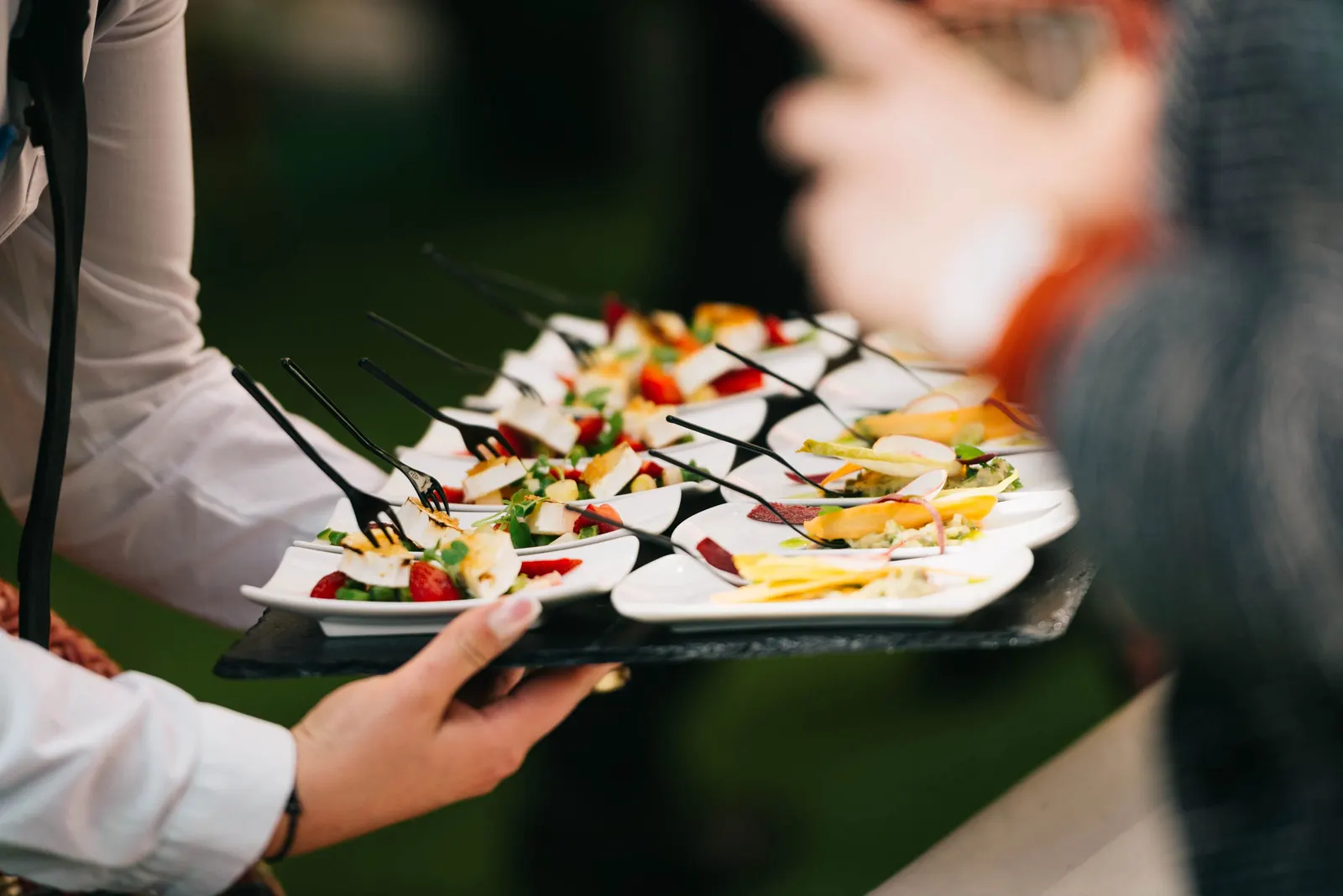
Event and private caterers, corporate catering companies and mobile food businesses that cater functions: businesses that sell by quote, work at somebody else’s venue, and plan every job around a guest count, a date, a place and a list of dietary requirements. A restaurant’s own bookings belong on the restaurants page.
What does ROISynth build for a caterer?
An enquiry form that asks for the date, the venue, the guest count, the style of service and every dietary need before anything is quoted, so the first reply can be a price rather than a question. Behind it, quotes are drafted from your own menus and prices, which you check and send; nothing goes out with your name on it until you’ve said yes.
Around that sit menu pages clients can choose from, and a record of each event that holds the numbers, the timings and the allergies in one place.
What goes wrong in catering that doesn’t in a restaurant?
A restaurant’s customer comes to you. A caterer goes to the customer, to a kitchen they have never seen, for a number of people that changes more than once before the day. Every job is a small project with its own logistics.
And nothing is sold until it is quoted. A restaurant can lose a booking; a caterer loses the work before it starts, to whoever answered the enquiry properly first.
How do catering enquiries arrive?
Incomplete, and usually in the evening. People plan events after work: the message gives the date and the occasion and not much else, and every missing detail costs a round of emails.
Asking for those details up front is the difference between a quote and a conversation. Each enquiry arrives already labelled with the date, the numbers and the dietary needs, so you can see at a glance which ones are worth your evening.
How does it fit around running events?
Weekends are for events and evenings are for the quotes nobody had time to write. Here, the quote is drafted from your own menus once the enquiry is complete, and it waits for you to approve it. You describe a change in a sentence, and it is already being worked on.
Once an event is booked, the numbers move. Every change lands on the one record for that event, so the final count, the allergies and the arrival time are in one place when you load the van — not spread across a month of messages.
What does a caterer own at the end?
The site, the menus, the quotes and the history of every event you have done. Every account is in your name, and the code is yours.
That history is what makes the next quote easier: what forty people actually ate at a summer wedding is on record, not in someone’s memory.
What actually changes, in the order it matters to you.
- Nothing goes out with your name on it until you've said yes.
- You describe what you want in a sentence, and it's already being worked on.
- Everything about every customer sits in one place, and it's yours.
- What you send a customer looks designed, because it was.
- Money's collected, receipts go out, and nothing gets chased.
- The follow-up that always gets forgotten, never gets forgotten.
- Decisions get written down when they're made, so nobody re-argues them in March.
- Pages get written for the things people are actually searching for.
The audit will show you what somebody planning an event finds when they search for caterers nearby, and what your site asks them before they give up and email someone else.
Questions people ask
- What does the enquiry form ask before I quote?
- The date, the venue, the guest count, the style of service and every dietary need, so the first reply can be a price rather than a question.
- Do quotes go out without me seeing them?
- No. Quotes are drafted from your own menus and prices, which you check and send; nothing goes out with your name on it until you’ve said yes.
- The guest numbers keep changing. Where does that get tracked?
- Every change lands on the one record for that event, so the final count, the allergies and the arrival time are in one place when you load the van.
- Why does replying properly first matter so much in catering?
- Because nothing is sold until it is quoted. A caterer loses the work before it starts, to whoever answered the enquiry properly first.
Want to talk through how this would fit your business? Message on WhatsApp, or send a message and it reaches the person who would do the work.